We Buy 15kV Utility and Campus Switchgear
Data Center Buyers buys used and surplus 15kV switchgear from data centers, utility-fed campuses, and industrial facilities throughout the US and Canada. We consider metal-clad breaker lineups, metal-enclosed switch sections, pad-mounted gear, and associated metering sections. Send an asset list, nameplate photos, and your removal schedule for a written offer within 24 hours after we receive the list and photos. Call 951-403-5738 or use our online quote form.
Selling 15kV Switchgear: What to Know
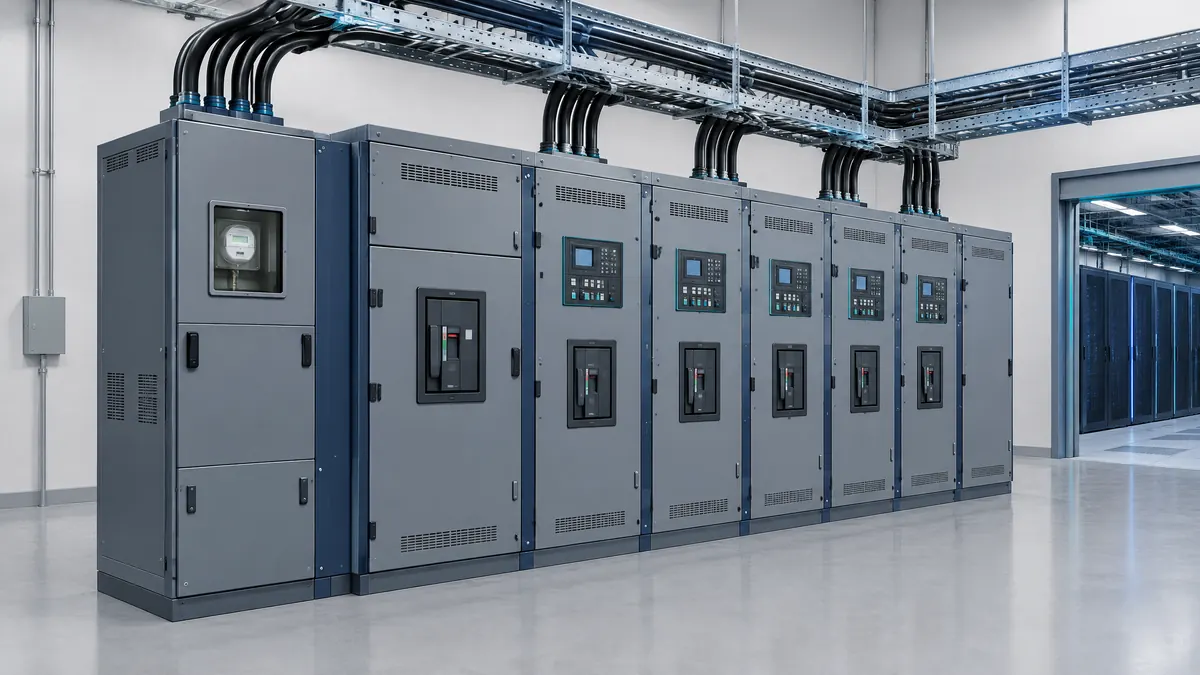
A campus may call its distribution system 12.47kV, 13.2kV, or 13.8kV while the switchgear nameplate shows a 15kV maximum rating. These are nominal operating voltages commonly served by 15kV-class equipment, not three interchangeable equipment specifications. When selling, report both the system voltage from the one-line diagram and the assembly's nameplate rating. This gear can sit upstream of transformers supplying separate data center power trains, or serve campus feeders and industrial loads. Identify which sections are customer-owned and which must remain in service. A cabinet count alone does not explain the assets available for purchase.
The 15kV category includes several construction types, so separate them in your asset list. Metal-clad lineups use draw-out circuit breakers; metal-enclosed load-interrupter assemblies may combine switches with power fuses; pad-mounted units serve underground distribution circuits. Eaton VacClad-W, MVS, and Cooper Power series RVAC are verified examples within this voltage category, but their ratings and applications differ. Preserve the existing section order, breaker assignments, metering equipment, and drawings before dismantling. We evaluate equipment for complete-system reuse or parts value based on its actual configuration and condition. Include the shutdown window so an offer and removal plan can fit the site's operating needs.
15kV Switchgear We Buy
15kV metal-clad breaker lineups
- Eaton VacClad-W 15kV assemblies with their matched draw-out vacuum breakers and identified feeder cells.
- Main and tie arrangements from 12.47kV, 13.2kV, and 13.8kV campus systems, with section functions recorded.
- Lineups with 1200A, 2000A, or 3000A bus and breaker ratings, as documented on the actual equipment.
- Breaker-equipped assemblies with documented 25kA, 40kA, 50kA, or 63kA ratings; identify assembly withstand and breaker interrupting ratings separately.
15kV metal-enclosed switch sections
- Eaton MVS 15kV load-interrupter switchgear, including single sections and connected distribution lineups.
- 600A and 1200A load-interrupter switches with their installed fuses, fuse holders, and rating information.
- Transformer primary switch sections offered with drawings identifying their connection to the campus feeder.
- Duplex switch arrangements with matching operators, interlock keys, and the original circuit configuration documented.
15kV-class pad-mounted distribution gear
- Eaton Cooper Power series RVAC 15kV-class units, whose published maximum design voltage is 15.5kV.
- 600A campus switching units with their source and tap circuits identified rather than described only by cabinet size.
- Fused or non-fused underground distribution assemblies with the insulation medium, connector ratings, and included controls listed.
Metering sections within the 15kV assembly
- Customer-owned utility metering compartments offered with the associated incoming and main switchgear sections.
- Current and voltage transformers retained with their ratio labels, mounting arrangements, and available metering drawings.
- Auxiliary and control-power sections included in the 15kV asset list, with any utility-retained components clearly excluded.
What Affects Your Offer for 15kV switchgear
Voltage class and insulation ratings
Provide maximum rated voltage and basic impulse insulation level, or BIL, alongside nominal service voltage. Eaton's referenced 15kV VacClad-W and MVS designs list 95kV BIL. Do not infer that rating for an unidentified assembly or describe 13.8kV operation as proof of compatibility.
Current and fault-duty identification
Bus amperage, breaker continuous current, and interrupting capability affect possible applications. For switch-and-fuse equipment, identify the load-switch rating and fuse details separately. A higher rating may expand potential uses, but missing labels make the actual capability harder to establish and can limit an offer.
Complete feeder and metering configuration
Keep matched breakers, instrument transformers, operators, and section drawings associated with the lineup. Missing incoming sections or unknown metering ratios can restrict complete-system reuse. Clearly mark any utility-owned meter or compartment that is not included so the offer reflects the assets you can transfer.
Condition at shutdown and during storage
Report the last operating date, known faults, moisture exposure, corrosion, and any missing insulation or cable-compartment parts. Existing maintenance records help describe the equipment without assuming cabinet appearance proves condition. Older or non-working 15kV gear may still have parts value; what cannot be resold is recycled responsibly.
Section boundaries and removal access
Drawings showing shipping splits and section dimensions help explain whether the assembly can leave intact or in identified groups. Include access restrictions, outdoor pad conditions, and the equipment that must remain operational. Preserve joint hardware and labels because an undocumented split can reduce the usefulness of the remaining sections.
For broader pricing context, read our guide: Used switchgear value on the secondary market.
What to Send for an Accurate Quote
- Asset list by section number, manufacturer, family, serial number, and quantity; mark the incoming, main, tie, feeder, and metering sections included.
- Clear nameplate photos showing maximum rated voltage, BIL, bus amperage, and short-circuit ratings, plus separate breaker or switch-and-fuse labels.
- One-line diagram showing the 12.47kV, 13.2kV, or 13.8kV service, feeder assignments, ownership boundary, and sections excluded from the sale.
- Exterior and accessible label photos, a list of matched breakers and accessories, and existing metering transformer ratio records; do not open energized compartments for photos.
- Existing maintenance reports, last operating date, known damage, storage history, and any missing fuses, operators, interlock keys, or enclosure parts.
- Site city, shutdown window, removal deadline, section dimensions, available weight information, loading route, and security or utility coordination requirements.
When Companies Sell 15kV switchgear
- A data center capacity upgrade replaces a 13.8kV incoming lineup after the new supply is commissioned, leaving the old 15kV main and feeder sections available.
- A campus feeder redesign releases customer-owned 12.47kV pad-mounted switching gear after loads move to a different underground distribution route.
- An industrial site consolidation leaves a 13.2kV switch-and-fuse lineup and its metering section surplus, with ownership and removal boundaries documented.
- A phased campus expansion changes the planned feeder layout, leaving never-installed 15kV sections available with factory drawings and a record of their storage conditions.
Removal, Safety, and Logistics
Before disconnection, qualified electricians must de-energize and lock out the 15kV gear. Removal is coordinated with your electrician or facility team after electrical isolation and disconnection are complete. Identify utility-controlled compartments and adjacent feeders that remain operational before planning access. When we purchase, de-installation, rigging, and insured freight are included, with no removal or recycling fees deducted from the offer. Pickup is typically scheduled within a few business days after acceptance around access, security, and uptime needs. Keep section labels, matching hardware, and drawings together. Payment is by company check or wire transfer, on pickup or per agreed terms for larger projects.
Power Equipment Removal Is Planned Before Pickup
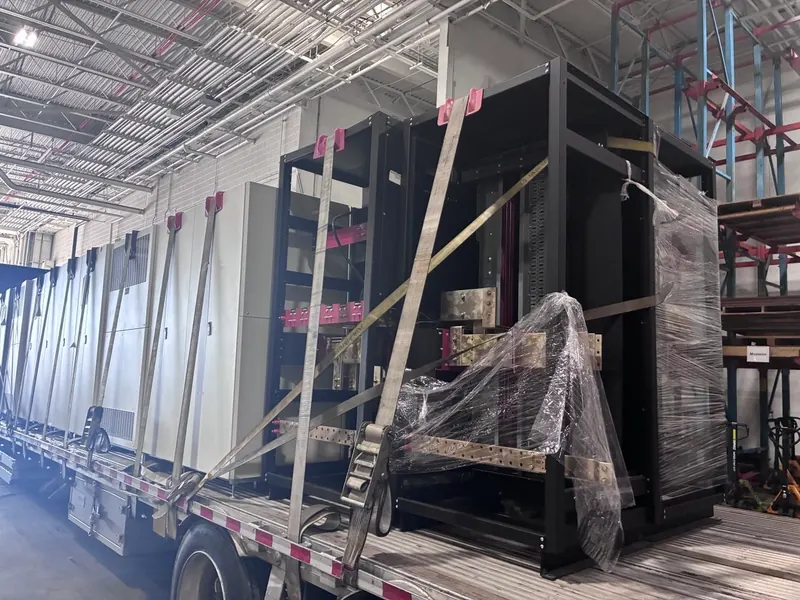
This owner-provided project photo shows data center power equipment secured on a flatbed during a removal. Switchgear sections, breakers, and transfer equipment are heavy, so dimensions, weights, access routes, and rigging needs are confirmed with your team before the truck arrives.
Get a Written Offer for Your 15kV Switchgear
Send nameplate photos, quantities, and your removal timeline. We reply with a written offer within 24 hours of receiving the list and photos.
15kV Switchgear: Seller Questions
Should I describe a 13.8kV campus lineup as 13.8kV or 15kV when requesting an offer?
Send both descriptions and identify their source. The campus one-line may state a nominal 13.8kV system, while the equipment nameplate gives a 15kV maximum rating. The same distinction applies to 12.47kV and 13.2kV systems. Include the assembly, breaker, and instrument-transformer labels rather than treating the operating voltage as a complete specification. Voltage class alone does not establish compatibility with another installation.
Does a 600A rating on my 15kV switch establish its fault-interrupting capability?
No. A continuous-current or load-switching rating describes a different duty from interrupting a short circuit. For Eaton MVS switch-and-fuse gear, the load-interrupter switch handles rated load switching while the fuses provide fault protection. Send the switch label, installed fuse information, and assembly ratings together. Do not substitute a 600A label for a fault rating or assume every vacuum switching device is a circuit breaker.
Which standard markings help identify my 15kV breaker lineup versus switch-and-fuse gear?
Eaton's referenced VacClad-W metal-clad design identifies IEEE C37.20.2, while its MVS metal-enclosed load-interrupter design identifies IEEE C37.20.3. Photograph the assembly label and provide the manufacturer's drawings if available. These references help identify construction; they do not establish the condition of your equipment or mean two different 15kV families can share breakers. Report the actual family and included devices with the marking.
Can I include the utility metering compartment in a 15kV switchgear sale?
Include it only after confirming what you own and can transfer. A metering section, its instrument transformers, and the revenue meter may have different ownership or retention requirements. Mark utility-retained components on the asset list and drawings. Preserve existing metering documentation because a receiving utility may have different requirements; the original installation's acceptance should not be presented as approval for another site.
Can I offer only the retired 15kV feeder sections while the campus mains stay energized?
You can submit the identified surplus sections for evaluation without offering the entire lineup. Send drawings showing their relationship to the retained mains, section boundaries, available breakers, and the planned shutdown window. Do not separate connected sections or open live compartments to improve quote photos. Qualified electricians must establish de-energization and lockout before disconnection, and removal planning must account for neighboring equipment that continues serving the campus.
Related Switchgear We Buy
- Metal-Clad Switchgear
- Metal-Enclosed Switchgear
- Pad-Mounted Switchgear
- Service-Entrance Switchgear
- All Electrical Switchgear
15kV Switchgear Brands We Buy
Get a written offer within 24 hours
Send your asset list and we respond with a firm written offer, typically within one business day. We pay top dollar, handle rigging and freight, and provide secure data wiping with a certificate on request.
Call 951-403-5738 or request a quote online.