We Buy Complete Secondary Unit Substations
Data Center Buyers buys used and surplus secondary unit substations throughout the US and Canada, including complete primary switching sections, transformers, and close-coupled low-voltage distribution lineups. Send an asset list, nameplate photos, and your removal schedule for a written offer within 24 hours, typically one business day. Call 951-403-5738 or submit the assembly details through our online quote form before separating its sections.
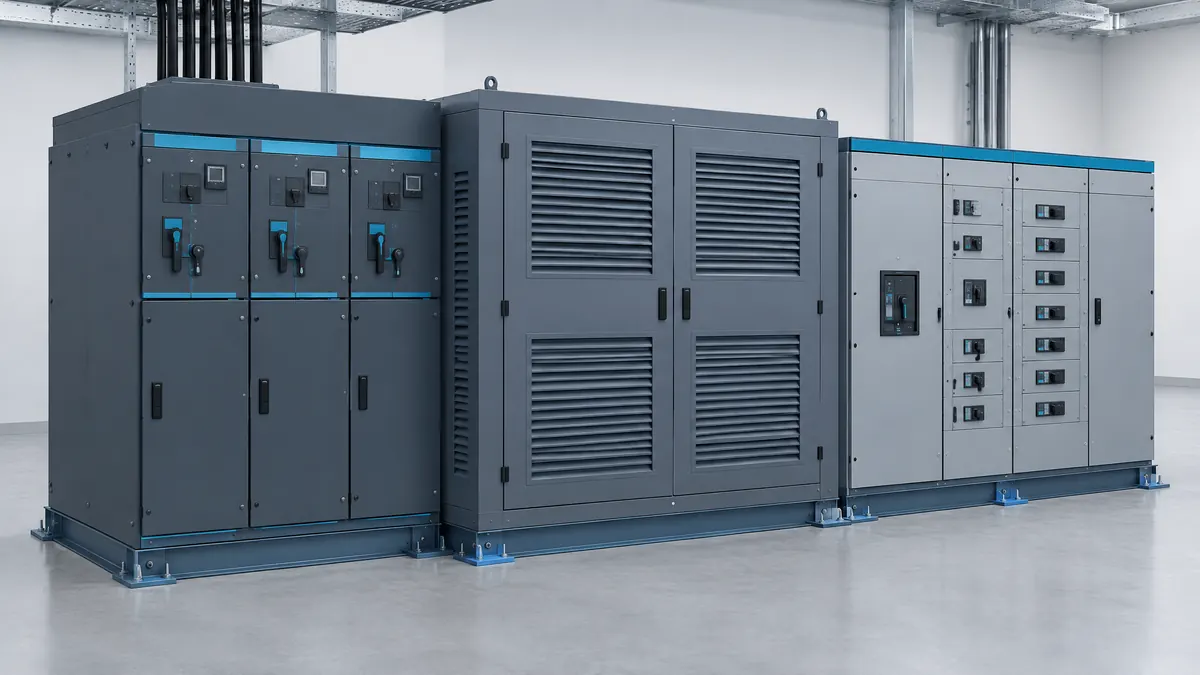
Selling Unit Substations: What to Know
A secondary unit substation combines medium-voltage primary switching or breaker equipment, a three-phase transformer, and low-voltage switchgear or a switchboard in a close-coupled assembly. The transformer can be dry-type or liquid-filled. Eaton documents typical secondary voltages of 208, 240, 480, and 600 V for these assemblies; use your own nameplates rather than assuming a rating from appearance. For a seller, the key asset is the matched lineup, not just the transformer or cabinet count. Keep transition enclosures, connection hardware, and drawings associated with the equipment. These details help establish whether the primary, transformer, and secondary can be evaluated together for another installation.
Data center power-train upgrades can release single-ended substations or double-ended assemblies with two transformers and a main-tie-main secondary arrangement. Document each side separately, including which sections will remain at the facility. A tie breaker alone does not describe the complete arrangement; the one-line diagram and control drawings explain how the two sides relate. Industrial plants and campus consolidations can also leave complete assemblies available. Data Center Buyers evaluates installed, removed, and never-installed substations, including older or non-working equipment that may retain resale or parts value. Submit the lineup before dismantling it so the offer reflects its actual configuration, missing parts, and planned removal boundaries.
Unit Substations We Buy
Close-coupled dry-type assemblies
- Primary switch or breaker sections matched to a dry-type transformer and low-voltage secondary lineup.
- Cast-coil transformer assemblies with their original primary and secondary connection enclosures retained.
- Indoor secondary unit substations with identifiable distribution sections, transformer monitoring equipment, and assembly drawings.
Integrated liquid-filled substations
- Liquid-filled transformers offered together with primary switching equipment and the connected low-voltage distribution lineup.
- Assemblies with transformer throat connections, transition covers, radiators, and associated secondary bus connection parts.
- Indoor or outdoor integrated assemblies with fluid identification, equipment nameplates, and disclosed storage or operating condition.
Double-ended and surplus assemblies
- Two-transformer unit substations with both secondary mains, the bus tie, and matching feeder sections identified.
- Matched substation pairs released from data center power trains, with each primary source and removal boundary documented.
- Never-installed or partially installed integrated lineups from cancelled capacity expansions, including separately packed connection hardware.
Documented manufacturer configurations
- Eaton unit substations incorporating MVS primary switching and Magnum DS low-voltage secondary switchgear, with the matching transformer.
- Schneider Electric Square D assemblies incorporating HVL or HVLcc primary equipment, a transformer, and PowerZone 4 secondary switchgear.
- Schneider Electric unit substations with QED2 secondary switchboards and the corresponding transformer and primary sections.
What Affects Your Offer for unit substations
Matched connections and assembly completeness
Original transformer throats, bus transitions, covers, and connection hardware affect whether the assembly remains a usable matched package. Identify anything cut, discarded, or left at the site. Photographs of the section interfaces are more useful than a statement that every cabinet is present.
Ratings across all three equipment sections
Provide primary voltage, transformer kVA and voltage ratio, and secondary bus ratings. Include the secondary equipment label: UL 1558 switchgear and UL 891 switchboards are distinct options. Do not assign one section's label or current rating to the whole substation.
Double-ended arrangement and controls
For main-tie-main assemblies, document both transformers, both main devices, and the tie section. Control schematics, interlock information, and any modifications help explain the configuration. A missing tie compartment or undocumented alteration can limit the options for reusing the integrated lineup.
Documented condition of the integrated system
Share the last operating date, maintenance records, and available transformer and switching-equipment reports. Disclose leaks, water exposure, overheating, or unresolved trips by section. A fault in one component should be described specifically rather than calling the entire assembly either working or scrap.
Physical layout and removal constraints
Dimensions, transformer weight, shipping splits, and front or rear access affect how the assembly can be moved and reused. Provide layout drawings and identify building modifications or retained sections that restrict removal. Outdoor exposure and storage conditions also matter when describing an idle lineup.
For broader pricing context, read our guide: Used switchgear value on the secondary market.
What to Send for an Accurate Quote
- An asset list identifying each integrated substation, its manufacturer, assembly identifiers, serial numbers, and every primary, transformer, and secondary section included.
- Clear nameplate photos showing primary ratings, transformer kVA and voltage ratio, secondary bus ratings, and the switchgear or switchboard equipment label.
- Wide exterior photos showing the complete lineup and its section order, plus safely accessible views of transition enclosures and loose connection parts; do not open energized equipment.
- One-line diagrams, assembly layouts, shipping-split drawings, and control schematics, with both sides of a double-ended arrangement and all retained equipment clearly marked.
- Transformer type, documented fluid identity if liquid-filled, available maintenance reports, last operating date, and a section-by-section list of damage or missing components.
- Site city in the US or Canada, shutdown window, removal deadline, approximate dimensions and weights, loading access, doorway restrictions, and security requirements.
When Companies Sell unit substations
- A data center replaces a complete transformer-fed power train during a capacity upgrade, leaving the primary section, transformer, and secondary lineup available after the replacement is operating.
- A colocation consolidation releases a double-ended substation; the seller needs both halves and the bus tie documented without including neighboring equipment that must remain operational.
- A cancelled campus expansion leaves a never-installed secondary unit substation in separate shipping sections, with its transformer and factory-packed transition hardware still identifiable.
- An industrial plant closes an electrical room and offers its integrated substation before demolition, allowing ownership, equipment boundaries, access, and the shutdown schedule to be established together.
Removal, Safety, and Logistics
The assembly must be de-energized and locked out by qualified electricians before disconnection. Removal is coordinated with your electrician or facility team, including all sources associated with a double-ended lineup. Do not separate bus transitions or remove fluid to prepare a quote. Share drawings, documented weights, shipping splits, and access restrictions for removal planning. When we purchase, de-installation, rigging, and insured freight nationwide are included, with no removal or recycling fees deducted from the offer. Pickup is typically scheduled within a few business days after acceptance, around security and uptime needs. Keep each section's connection parts identified through handoff.
Power Equipment Removal Is Planned Before Pickup
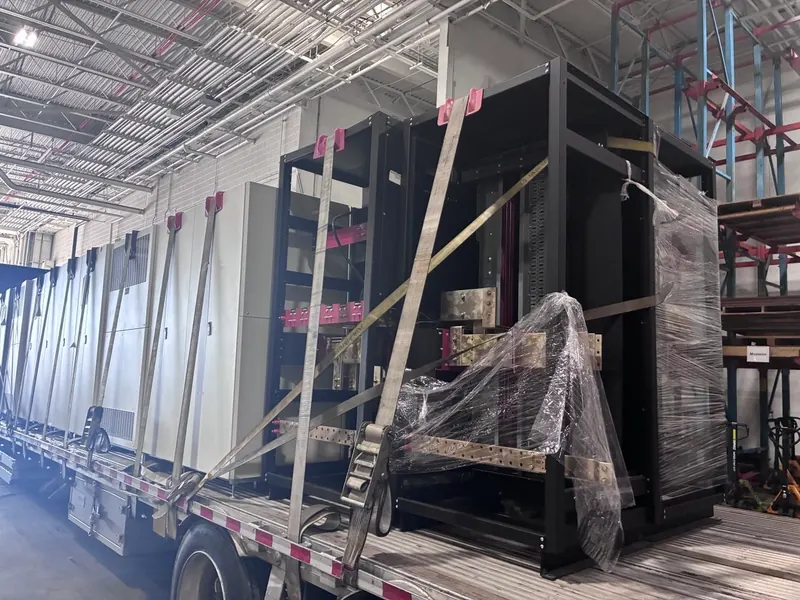
This owner-provided project photo shows data center power equipment secured on a flatbed during a removal. Switchgear sections, breakers, and transfer equipment are heavy, so dimensions, weights, access routes, and rigging needs are confirmed with your team before the truck arrives.
Get a Written Offer for Your Unit Substations
Send nameplate photos, quantities, and your removal timeline. We reply with a written offer within 24 hours of receiving the list and photos.
Unit Substations: Seller Questions
Should I offer the complete unit substation before selling its transformer separately?
Yes. Submit the primary equipment, transformer, and secondary lineup as one identified assembly first. Include any portions that you intend to retain. The matching interfaces and original drawings may support reuse as an integrated package, whereas separating the transformer can leave a secondary lineup without its required transition. Transformer-only assets belong in the separate transformer category; this page concerns the combined substation.
How should I list the two halves of a double-ended unit substation?
Give each transformer and primary section its own identifier, then show how they connect to the two secondary mains and shared tie section. Include each transformer's ratings rather than reporting only a combined kVA figure. Mark the original section order on the layout and flag any controls, feeder sections, or connections that will remain at your facility. This avoids treating two related halves as unrelated cabinet lots.
Can an installed unit substation receive an offer before its shutdown window?
Yes. An asset list, safely obtained photos, drawings, and access details can describe the integrated substation while it remains installed. State when both primary and secondary equipment will become available, especially if one side remains in service longer. Payment is by company check or wire transfer, on pickup or per agreed terms for larger projects. Agree on the sale and removal boundaries before any dismantling begins.
What if I cannot identify the liquid in my unit substation transformer?
Report the fluid identity as unknown and send the transformer nameplate and any existing fluid or maintenance records. Do not assume the liquid type from the tank's appearance or a nearby substation's label. Describe visible leakage without disturbing fittings. The uncertainty belongs in the assembly's condition description so the purchase and removal discussion accounts for it; there is no need to drain the transformer for a quote.
Can a unit substation with missing transformer-to-secondary transitions still be considered?
Yes, but clearly identify which bus links, throat covers, supports, or connection parts are absent or damaged. Send original interface drawings and photos of remaining pieces if available. Missing transitions can prevent evaluation as a complete matched lineup, although identifiable sections may retain resale or parts value. Do not fabricate replacement connections or discard loose hardware before the assessment. Equipment that cannot be resold is recycled responsibly.
Related Switchgear We Buy
- Medium-Voltage Switchgear
- Low-Voltage Switchgear
- Electrical Switchboards
- Outdoor Switchgear & E-Houses
- New Surplus Switchgear
- All Electrical Switchgear
Unit Substations Brands We Buy
Get a written offer within 24 hours
Send your asset list and we respond with a firm written offer, typically within one business day. We pay top dollar, handle rigging and freight, and provide secure data wiping with a certificate on request.
Call 951-403-5738 or request a quote online.