We Buy Used Low-Voltage Switchgear Lineups
Data Center Buyers buys used and surplus low-voltage power circuit breaker switchgear throughout the US and Canada, including 480 V draw-out lineups and main-tie-main assemblies. Send an asset list, nameplate photos, and your shutdown schedule for a written offer within 24 hours, typically one business day. When we purchase, de-installation, rigging, and insured freight nationwide are included. Call 951-403-5738 or use our online quote form.
Selling Low-Voltage Switchgear: What to Know
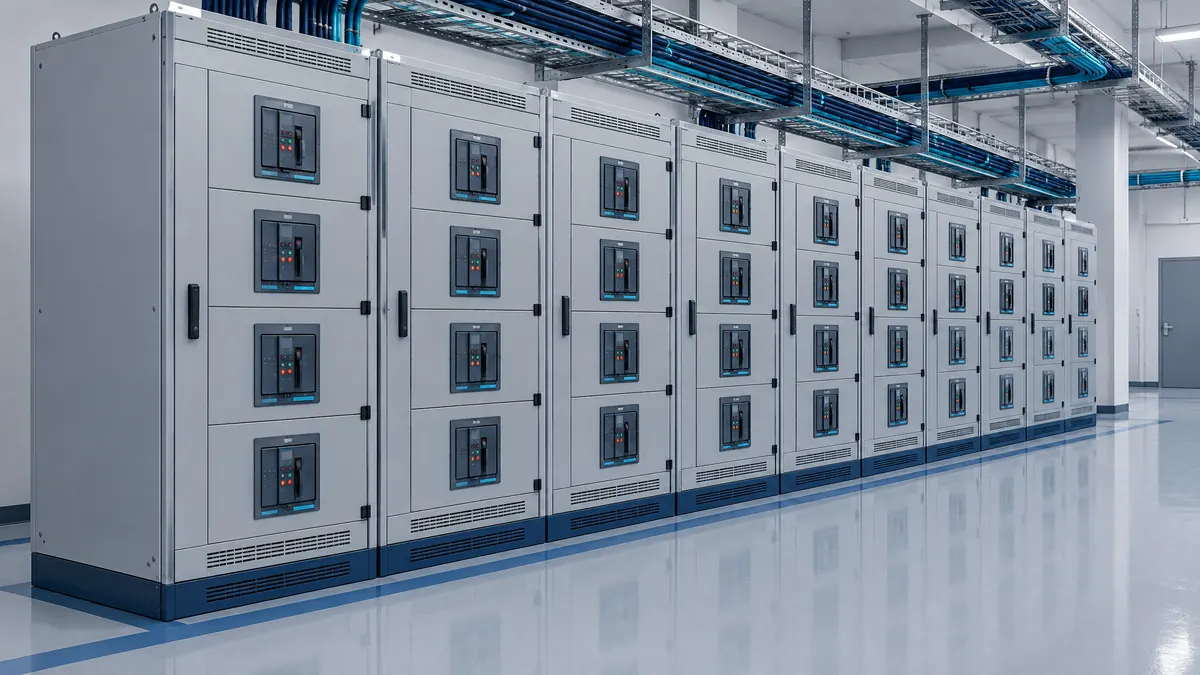
Low-voltage switchgear is more than a row of breaker cabinets. This page covers metal-enclosed power circuit breaker assemblies associated with UL 1558 and ANSI C37.20.1, serving nominal 208–600 V systems. In a data center, a 480 V lineup may distribute power to UPS power trains and other critical loads. Its resale potential depends on the actual bus rating, installed breaker configuration, and complete connections between sections. Record the assembly label rather than identifying equipment by its appearance alone. UL 891 switchboards are a separate equipment category, even when a facility calls every electrical cabinet switchgear.
A capacity expansion or power-room redesign can leave a usable lineup that no longer fits the original site's requirements. Sellers should preserve the relationship between main, tie, and feeder sections before contractors separate them. Main-tie-main gear has two main breakers and a bus tie; the one-line drawing shows how the sources and feeders connect. Identify which sections belong to each power train and which will remain in service. Data Center Buyers buys complete low-voltage lineups and identifiable partial assemblies from data centers and industrial facilities. Older or non-working equipment can still have resale or parts value, but missing bus connections or undocumented modifications can limit reuse.
Low-Voltage Switchgear We Buy
Identifiable low-voltage switchgear families
- Eaton Magnum DS metal-enclosed low-voltage switchgear, with the installed main, tie, and feeder sections identified.
- Siemens Type WL low-voltage metal-enclosed switchgear, with assembly labels and section arrangement drawings.
- Schneider Electric / Square D Power-Zone 4 low-voltage drawout switchgear, with its matching installed breakers and controls.
Nameplate-rated low-voltage assemblies
- 208 V and 240 V nominal system lineups identified as low-voltage power circuit breaker switchgear.
- 480 V lineups from data center power rooms, with actual continuous bus and short-circuit ratings documented.
- 600 V nominal system assemblies, including equipment from Canadian facilities, with voltage and frequency labels supplied.
- Lineups with documented 2000, 3200, 4000, 5000, or 6000 A main bus ratings; the installed assembly label determines its rating.
Complete and partial lineup arrangements
- Main-tie-main assemblies offered with both main sections, the tie section, and their matching feeder sections.
- Single-main draw-out breaker lineups with intact buswork, cable compartments, section covers, and assembly identification.
- Matching A-side and B-side power-room lineups offered together, with each side separately inventoried.
- Partial low-voltage switchgear assemblies with clearly identified section boundaries, retained components, and missing equipment.
What Affects Your Offer for low-voltage switchgear
Assembly voltage, bus rating, and fault ratings
Supply the nominal system voltage, continuous bus amperage, and labeled short-circuit or withstand ratings. A breaker faceplate does not establish every assembly rating. Photograph the lineup's own label and available rating schedules so the equipment can be matched to another project's requirements.
Installed breaker and cell configuration
Count occupied and empty cells by section. Identify each installed main, tie, and feeder breaker, including its frame rating and trip unit. Different breakers within one lineup may have different ratings. Missing draw-out elements or altered cells can reduce the usefulness of an otherwise complete assembly.
Continuity and completeness of the lineup
Keep inter-section bus connections, neutral and ground connections, covers, and matching control wiring identified with their sections. A complete main-tie-main arrangement is easier to evaluate than disconnected cabinets with an uncertain order. Disclose any sections, connection hardware, or internal assemblies that the facility intends to retain.
Documented condition and modification history
Provide the last operating date, available maintenance reports, and known faults. Disclose moisture exposure, overheating, corrosion, or damaged insulation without opening energized compartments. Record breaker replacements and control changes against the drawings. Original paperwork is useful, but it should not conceal later changes to the installed equipment.
Physical layout and removal constraints
Lineup length, depth, connection locations, and access arrangement affect whether another installation can use the assembly. Share shipping-section drawings, available weights, and the route out of the power room. Explain any restricted shutdown windows or adjacent live equipment before agreeing on the removal scope.
For broader pricing context, read our guide: Used switchgear value on the secondary market.
What to Send for an Accurate Quote
- An asset list with manufacturer, family, assembly serial numbers, total section count, and a separate entry for each A-side or B-side lineup.
- Clear exterior and assembly-nameplate photos showing voltage, frequency, bus amperage, labeled fault ratings, and the equipment standard where marked.
- A section-by-section breaker schedule with main, tie, and feeder positions, installed breaker identifiers, trip units, and any empty or stripped cells.
- The latest one-line diagram and lineup elevation, showing source connections, section order, cable entry, and which portions are included in the sale.
- Available maintenance records, last operating date, known damage, changes from the original drawings, and a list of missing covers or connection hardware.
- Site city in the US or Canada, removal deadline, earliest shutdown window, loading access, door dimensions, and available shipping-section weights.
When Companies Sell low-voltage switchgear
- A data center increases power capacity and replaces its 480 V main-tie-main lineup after the replacement power room is ready, leaving the original assembly available for purchase.
- A colocation facility consolidates electrical capacity and releases an entire redundant power-room lineup while retaining the other side; the seller identifies the exact sale boundary.
- An industrial plant closes a production area and offers its low-voltage main and feeder sections, with drawings showing which adjacent distribution equipment will remain operational.
- A data hall project changes before energization, leaving an unused low-voltage draw-out lineup with matching sections, assembly labels, and original arrangement drawings available to sell.
Removal, Safety, and Logistics
Do not open energized compartments to obtain quote photos. The gear must be de-energized and locked out by qualified electricians before disconnection or any removal work. We coordinate removal with your electrician or facility team, including the boundaries around equipment that remains live. When we purchase, de-installation, rigging, and insured freight nationwide are included, with no removal or recycling fees deducted from the offer. Pickup is typically scheduled within a few business days after acceptance, around access, security, and uptime needs. Preserve section identification and drawings through handoff. Payment is by company check or wire transfer, on pickup or per agreed terms for larger projects.
Power Equipment Removal Is Planned Before Pickup
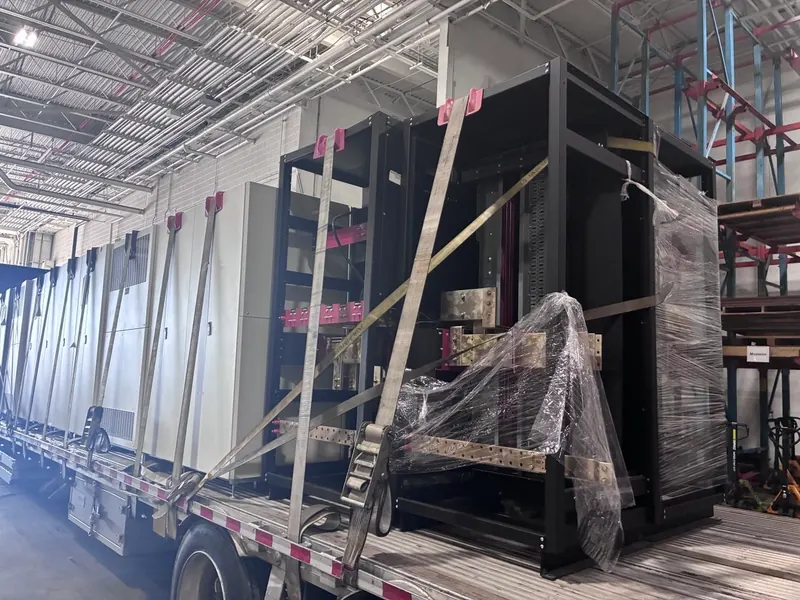
This owner-provided project photo shows data center power equipment secured on a flatbed during a removal. Switchgear sections, breakers, and transfer equipment are heavy, so dimensions, weights, access routes, and rigging needs are confirmed with your team before the truck arrives.
Get a Written Offer for Your Low-Voltage Switchgear
Send nameplate photos, quantities, and your removal timeline. We reply with a written offer within 24 hours of receiving the list and photos.
Low-Voltage Switchgear: Seller Questions
Does a draw-out breaker prove my 480 V lineup is UL 1558 switchgear?
No. Identify the assembly from its own nameplate and documents, not just the breaker mounting style. UL 1558 covers metal-enclosed low-voltage power circuit breaker switchgear; UL 891 identifies switchboards. Send the assembly label, manufacturer designation, and lineup elevation if your asset list only says switchgear. Do not open energized equipment to search for labels. The equipment category helps us evaluate the right configuration without assuming that similar-looking cabinets are interchangeable.
Should I keep both mains and the tie section together when selling a low-voltage lineup?
Include them together in the initial asset list when all are available. The main-tie-main arrangement, feeder sections, and inter-section connections describe a complete electrical assembly. If your facility must retain one main or a group of feeders, mark that boundary on the drawing and explain what connecting hardware remains. Do not separate the lineup solely to prepare a quote; an installed assembly can be described with safe exterior photos and existing records.
How should I list empty breaker cells in a low-voltage switchgear assembly?
List each empty position against its section number and explain whether it was reserved for expansion or had a breaker removed. Identify missing doors, draw-out hardware, or control connections if already known from records or safe inspections. Empty space is not installed feeder capacity. A partial lineup may still have resale or parts value, but the offer needs to reflect what is physically present rather than the original drawing alone.
Can I offer matching A and B low-voltage power trains on different shutdown dates?
Send both lineups in one asset list, but give each its own identifier, available date, and removal boundary. Note any connections or controls shared with equipment that must remain operational. The removal sequence is coordinated with your electrician or facility team around uptime needs. Separate shutdown dates should be discussed before acceptance so the purchase scope and pickup plan match the actual availability of each assembly.
What if my low-voltage lineup drawings no longer match the installed breakers?
Send the drawings and clearly identify the discrepancies. Add an installed breaker schedule, replacement dates where known, and any updated control diagrams. Do not present the original drawing as an accurate inventory after sections or breakers have changed. Existing maintenance and inspection records can help describe condition; you do not need to perform electrical work to obtain a quote. Honest documentation lets us distinguish missing information from missing equipment.
Related Switchgear We Buy
- Electrical Switchboards
- Low-Voltage Power Circuit Breakers
- Unit Substations
- Switchgear Parts & Components
- All Electrical Switchgear
Low-Voltage Switchgear Brands We Buy
Get a written offer within 24 hours
Send your asset list and we respond with a firm written offer, typically within one business day. We pay top dollar, handle rigging and freight, and provide secure data wiping with a certificate on request.
Call 951-403-5738 or request a quote online.