We Buy Bolted Pressure Switches and Fusible Disconnects
Data Center Buyers buys used and surplus bolted pressure switches, high-pressure contact switches, large fusible disconnects, and bulk lots of heavy-duty safety switches throughout the US and Canada. Send the manufacturer, amperage, voltage, fuse class, condition, and photos. We provide a written offer within 24 hours after receiving your asset list and photos. Call 951-403-5738 or request a quote online.
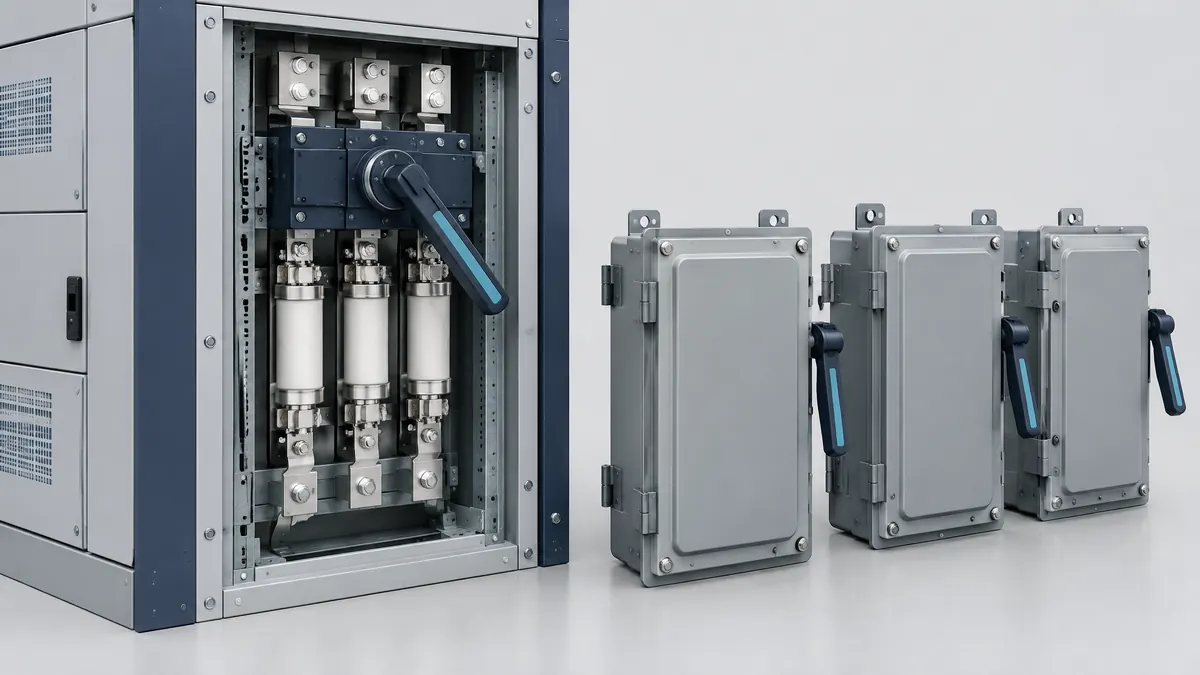
Selling Bolted Pressure & Fusible Switches: What to Know
A data center service upgrade can leave a large fusible main available even when the rest of the distribution equipment remains in use. Bolted pressure switches use a clamping mechanism at their contacts; they should not be identified simply as large breakers. Eaton Pringle and Boltswitch equipment includes configurations with different operators, feed arrangements, and protection accessories. For a seller, the useful starting point is the switch nameplate and its relationship to the surrounding enclosure. State whether you are offering an open switch assembly removed from a section, an enclosed disconnect, or several matching units from separate power trains.
Large-switch families span roughly 800–6000 A, but the upper ratings do not establish a common listing or interchangeable construction. Smaller heavy-duty safety switches belong in a separate lot schedule: Square D's range includes 30–1200 A units with voltage and enclosure options that vary by configuration. This page focuses on those switches rather than complete switchboard lineups. Equipment from retired data halls, electrical-room upgrades, and industrial service replacements can have resale or parts value. Keep fuse information, operating handles, and ground-fault accessories associated with each unit. Clear identification helps distinguish a reusable assembly from a collection of incomplete parts.
Bolted Pressure & Fusible Switches We Buy
Eaton Pringle bolted pressure switches
- Pringle QA Quick Action switches, identified by amperage and manual operating configuration
- Pringle CBC Charge-Before Close switches with their associated operating mechanisms
- Pringle FP Fault Protector switches with identified ground-fault equipment and control accessories
- Open or enclosed Pringle assemblies, with top-feed or bottom-feed arrangement documented
Boltswitch high-pressure contact switches
- Boltswitch B1T single-throw assemblies, including identified 800–6000 A configurations
- Boltswitch VL and VLB fusible switches with matching handles and mounting components
- Boltswitch SL and SLB large-frame fusible switches, including documented 4000–6000 A units
- Manual or shunt-trip Boltswitch assemblies with the operator and control details listed separately
Large fusible disconnect assemblies
- Service-entrance fusible mains with the original equipment markings and enclosure information
- Class L fuse switch assemblies with fuse ampere ratings and installed fuse quantities recorded
- Large enclosed disconnects with intact doors, fuse supports, terminals, and operating hardware
- Unused project-surplus disconnects or removed units with disclosed condition and missing components
Bulk heavy-duty safety switch lots
- Square D Heavy Duty and VisiPacT fusible safety switches grouped by catalog number
- Matching 240 Vac or 600 Vac units, keeping voltage ratings separate in the asset list
- Class R, Class J, or Class L configurations identified from the switch markings and fitted hardware
- Indoor and outdoor enclosure lots, with enclosure type, corrosion, and missing covers disclosed
What Affects Your Offer for bolted pressure & fusible switches
Switch rating versus installed fuse rating
Record the switch's rated amperage and voltage independently from the fuse ampere rating. A large cabinet or a smaller fitted fuse does not identify the switch frame. Include pole count, catalog number, and the actual equipment markings.
Fuse class and complete fuse mounting hardware
Fuse class affects compatibility, not just the fuse's current rating. Identify Class L on large assemblies or the applicable class on safety switches. Missing fuse supports, clips, rejection hardware, or barriers can limit reuse even when the main mechanism remains present.
Operator and ground-fault package
Identify manual, charge-before-close, or electrical-trip operation. Where ground-fault protection is fitted, list the relay, sensor, control power components, and wiring documentation. A handle alone does not establish a complete protection package, and an undocumented accessory set is harder to evaluate.
Contact condition and disclosed service history
Report sticking mechanisms, overheating, damaged insulation, corrosion, or a known fault event. Existing maintenance reports and the last operating date help explain condition. Do not operate a suspect switch for quote photos or assume clean exterior paint establishes internal condition.
Mounting arrangement and lot consistency
Top-feed and bottom-feed layouts, enclosure dimensions, and included mounting parts affect another installation's fit. In bulk lots, matching catalog numbers and complete hardware make evaluation clearer. Identify open chassis separately from enclosed units rather than counting them as equivalent cabinets.
For broader pricing context, read our guide: Used switchgear value on the secondary market.
What to Send for an Accurate Quote
- Asset list showing manufacturer, family or catalog number, quantity, switch amperage, voltage, pole count, and fusible or non-fusible configuration.
- Readable switch and enclosure nameplate photos, including UL 977 or other markings where present and any service-entrance designation.
- Fuse labels showing class, ampere rating, and quantity; identify absent fuses or missing fuse mounting hardware without disturbing installed equipment.
- Operator identification and available ground-fault relay, sensor, control power, and shunt-trip information; include drawings that show their association with the switch.
- Exterior and safely available condition photos showing handles, enclosure damage, corrosion, mounting parts, and known missing components; state the last operating date and known faults.
- Site city in the US or Canada, shutdown window, ownership confirmation, removal deadline, equipment dimensions, and loading-route or security restrictions.
When Companies Sell bolted pressure & fusible switches
- A data center increases service capacity and retires a bolted pressure fusible main after the replacement supply is commissioned, leaving its operator and ground-fault package available together.
- A colocation facility standardizes disconnect equipment across power trains and releases mismatched but identifiable heavy-duty safety switches as a grouped removal lot.
- A cancelled electrical expansion leaves unused large fusible disconnects with their original labels, drawings, and mounting hardware available before installation.
- An industrial plant or former data center closes a building and offers high-pressure contact switches alongside bulk safety switches, with each family and condition listed separately.
Removal, Safety, and Logistics
The gear must be de-energized and locked out by qualified electricians before disconnection. Do not open energized enclosures or manipulate switch blades to obtain quote photos. Removal is coordinated with your electrician or facility team after isolation and disconnection, with neighboring live equipment and site access accounted for. When we purchase, de-installation, rigging, and insured freight nationwide are included, with no removal or recycling fees deducted from the offer. Keep operators, fuse supports, and identified ground-fault components with their switches. Payment is by company check or wire transfer on pickup, or per agreed terms for larger projects.
Power Equipment Removal Is Planned Before Pickup
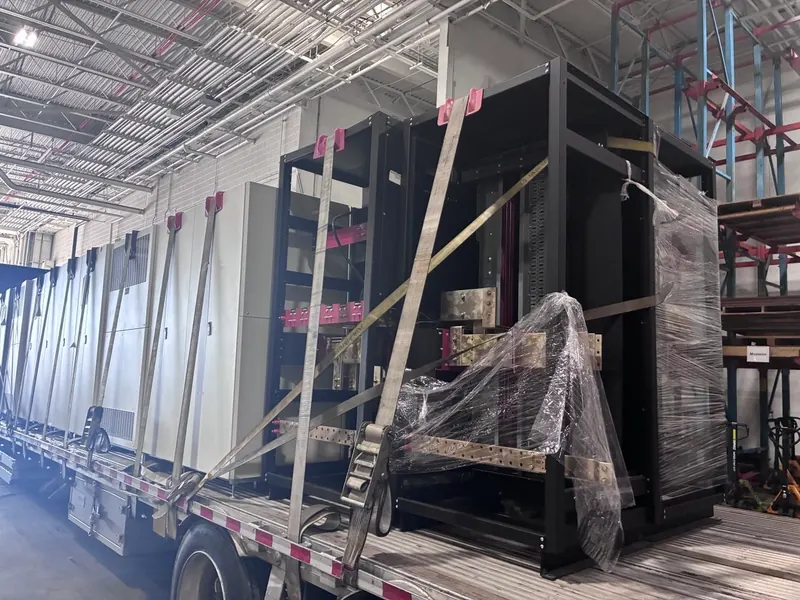
This owner-provided project photo shows data center power equipment secured on a flatbed during a removal. Switchgear sections, breakers, and transfer equipment are heavy, so dimensions, weights, access routes, and rigging needs are confirmed with your team before the truck arrives.
Get a Written Offer for Your Bolted Pressure & Fusible Switches
Send nameplate photos, quantities, and your removal timeline. We reply with a written offer within 24 hours of receiving the list and photos.
Bolted Pressure & Fusible Switches: Seller Questions
Can I offer a Class L fusible main when its fuses are missing?
Yes, submit the switch with the missing fuses disclosed. Photograph the switch nameplate and provide existing records of the fuse class and fitted ampere rating, if available. Distinguish absent fuses from missing supports, damaged terminals, or a stripped enclosure. The offer depends on the identifiable switch assembly and its remaining components; do not install replacement fuses merely to prepare it for a quote.
Which ground-fault components should stay with a Pringle FP or shunt-trip Boltswitch?
Identify the fitted relay, sensing equipment, trip operator, control power components, and their drawings before removal. Keep those components associated with the switch rather than mixing them into unrelated spares. Describe anything already missing or disconnected. Ground-fault protection and electrical-trip options vary by configuration, so neither the manufacturer name nor the switch amperage alone establishes which protection package your unit includes.
How should I describe a 5000 A or 6000 A Pringle switch in my seller list?
Use the actual nameplate rating, catalog designation, and photos rather than treating it as a larger version of any lower-rated unit. Eaton's Pringle brochure identifies 5000 A and 6000 A versions as not carrying a UL listing. Include all equipment markings and available drawings. That detail matters when evaluating reuse; it does not mean that every manufacturer's switch at those amperages has the same listing status.
Can an open bolted pressure switch be quoted without its original switchboard section?
Submit it as an open switch assembly and state exactly what remains. Include the operator, mounting hardware, terminal arrangement, fuse supports, and any associated protection equipment in the description. An open assembly and a complete enclosed disconnect have different reuse considerations. Before separating installed equipment, share the planned scope so the removal team can preserve the components identified in the offer.
How should I sort a mixed lot of heavy-duty fusible safety switches for an offer?
Group identical catalog numbers first, then record quantities, voltage, amperage, fuse class, and enclosure type. Separate unused units from removed equipment and mark missing handles, covers, or fuse hardware. Installed fuses should have their own rating information; they do not redefine the switch rating. Older or non-working units can still have resale or parts value, and what cannot be resold is recycled responsibly.
Related Switchgear We Buy
- Electrical Switchboards
- Service-Entrance Switchgear
- New Surplus Switchgear
- Damaged or Non-Working Switchgear
- All Electrical Switchgear
Bolted Pressure & Fusible Switches Brands We Buy
Get a written offer within 24 hours
Send your asset list and we respond with a firm written offer, typically within one business day. We pay top dollar, handle rigging and freight, and provide secure data wiping with a certificate on request.
Call 951-403-5738 or request a quote online.